
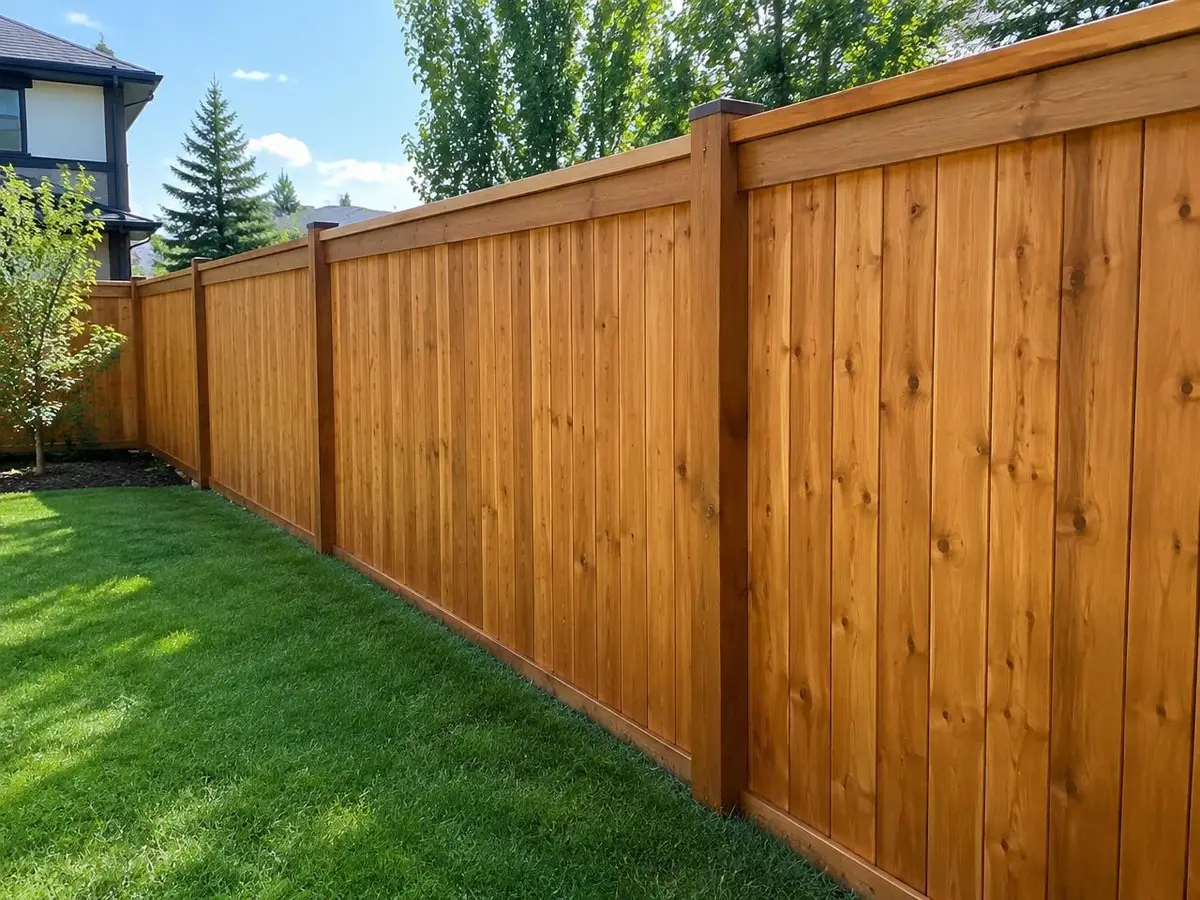
What does Calgary weather do to exterior wood?
Strong UV at altitude can fade wood and break down exposed finishes, while Calgary's dry air encourages boards to lose moisture and develop checks. Snow lingering against posts or on deck boards adds another source of stress. Chinook freeze-thaw swings repeatedly change the conditions around joints and fasteners. These factors do not mean every deck needs the same treatment; they mean the sunny deck off a south-facing kitchen should be assessed differently from a sheltered fence behind mature trees.
Our practical exterior season is roughly late May to mid-September, with suitable temperature and drying conditions still required within that window. A deck can look dry on top while holding moisture underneath or between boards. Rain, heavy dew and overnight cooling can affect when stain can be applied. We check the wood and follow the stain manufacturer’s requirements before starting. A warm weekend alone does not tell us whether the boards are ready.
Should you choose stain or paint for a deck or fence?
The existing finish helps determine the options. A transparent or semi-transparent stain needs a suitable, reasonably consistent wood surface because it will not hide old colour, repairs or weathering. A solid-colour system offers a different appearance but still needs sound preparation and compatibility with what is already there. Returning from an opaque coating to a more transparent look can require substantial removal, and sometimes the practical result will not match a new-wood sample.
Horizontal walking surfaces need products specifically suited to that use. A coating that works on a fence may not be appropriate for deck boards or stairs. Railings, posts and lattice can also have different exposures from the floor. We discuss the desired appearance alongside maintenance expectations, rather than presenting a thicker film as automatically better. Sample colour on representative wood where practical, because species, weathering and previous treatments all influence how a stain looks after application.
How do we clean and prepare the wood?
Preparation begins with checking for rot, loose boards, protruding fasteners and unstable railings. Structural or carpentry problems need attention before finishing; stain cannot make a soft post sound. Cleaning should remove contamination without damaging wood fibres. Excessive washing pressure can leave furrows and a fuzzy surface that needs further work. Nearby plants, siding and paving need protection appropriate to the cleaning method and coating, with access considered before work begins.
After cleaning and adequate drying, rough or raised fibres may need sanding, and failed coatings may require stripping or further removal. The exact process depends on the existing product and surface condition. New pressure-treated boards should not be coated simply because they were recently installed; their readiness needs assessment against the selected product's requirements. End grain and board edges deserve attention where accessible, but hidden undersides are not automatically part of a standard surface refinishing scope.
How should you plan access and maintenance?
Deck work can temporarily remove a route to the yard, so plan pet access, furniture storage and another safe entrance where needed. Keep planters and outdoor rugs away until the coating is ready for them, and follow the product guidance before allowing foot traffic. Fence work may require discussion with a neighbour about access and which faces are included. Shared boundaries and condo rules should be settled before the job, not once equipment is already in the yard.
Afterwards, sweep debris out of corners, avoid trapping moisture under stored items and inspect high-wear areas regularly. Hail can physically damage boards or the finish, so inspect after a storm rather than assuming a coating prevents impact damage. If the house exterior also needs attention, coordinate exterior painting as a separate scope. You can view our work for appearance ideas, and talk with Frank about the look that suits your wood. He explains the care it will need, including places to watch for wear from sun, snow and everyday use.