
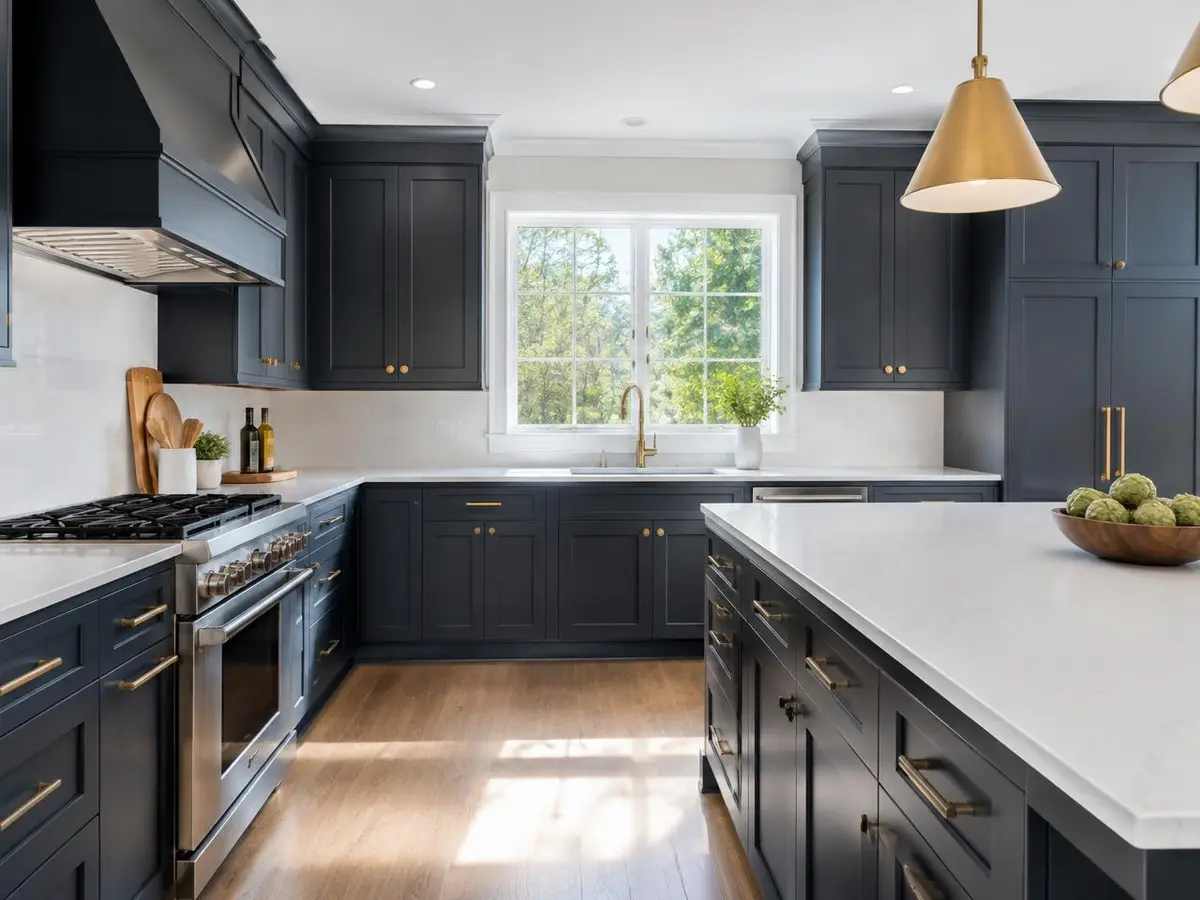
Are your cabinets a good candidate for painting?
The best starting point is a stable cabinet system with doors that fit and surfaces that can hold a coating. Solid wood, some veneers and suitable manufactured surfaces may be candidates after inspection and preparation. Paint does not straighten warped doors or restore weak hinges. If drawers bind or hardware needs changing, discuss those repairs before finishing, because drilling and adjustments are easier to address before the final coats rather than after the kitchen is back in use.
Peeling thermofoil and water-damaged boxes are warning signs, not minor blemishes to cover. A finish applied over a failing layer will depend on that weak layer underneath. Swollen panels beside a dishwasher or sink may need replacement, and moisture problems must be corrected first. Our comparison of cabinet painting and refacing can help you weigh options when the layout is useful but the door material or cabinet condition makes painting a poor fit.
How do we prepare cabinets for a lasting finish?
Kitchen surfaces collect cooking oils, hand oils and cleaning residues, even when they look clean. We begin with thorough degreasing using a method suited to the existing finish. Doors and removable drawer fronts are taken off and labelled so they return to their original positions. Hardware is removed or protected as agreed. Masking protects counters, flooring, appliances and other surfaces; cabinet interiors and shelf edges need a clear scope decision rather than an assumption.
After cleaning, the surface is sanded or scuffed to support adhesion, with dust removed before primer. Dents and unwanted hardware holes can be addressed when included in the scope. A compatible bonding primer helps connect the prepared surface to the finish system, but it is not a substitute for removing grease or loose coatings. On oak, the grain may remain visible unless additional filling is specifically included. We discuss that appearance before you approve a sample or finish approach.
Should the finish be sprayed or rolled?
A sprayed finish can provide a consistent appearance across detailed doors, while a carefully rolled finish may suit other surfaces or site conditions. The choice depends on access, containment, cabinet profiles and the finish you want. Spraying requires suitable masking and control of the work area. Rolling can leave a different surface texture. Frank explains the planned method for doors, frames and panels so you know where appearances may differ rather than expecting every surface to look factory made.
Colour and sheen should be assessed against counters, tile and flooring in both daylight and evening lighting. Calgary's bright winter light can make a white sample read differently from the same colour under warm kitchen lamps. Dry indoor air also affects working conditions, but fast surface drying does not mean a finish is ready for hard use. Product requirements determine recoating and curing, with time allowed before doors are handled, reinstalled or cleaned according to the paint manufacturer’s guidance.
What happens while the kitchen is out of service?
Expect some disruption around preparation, painting and reassembly. Before starting, decide which cupboards to empty, where small appliances will go and how meals will be managed while work areas are restricted. In a condo, check permitted work hours, loading access and any rules affecting coating application or ventilation. Keep children and pets away from wet surfaces and stored doors. The working sequence should be discussed in advance, including when limited kitchen access may be possible and when it is not.
The same careful assessment can apply to bathroom vanities, built-ins and wainscoting, though bathroom moisture and furniture-like details may call for different preparation. Coordinate adjacent trim and door painting if whites or sheens need to relate across the room. After reassembly, avoid early scrubbing, impact and sticking protective pads onto uncured paint. Cure times vary by product, so Frank explains when it is safe to clean the doors and use the cabinets normally. Gentle handling while the finish hardens helps prevent marks around handles and edges.