
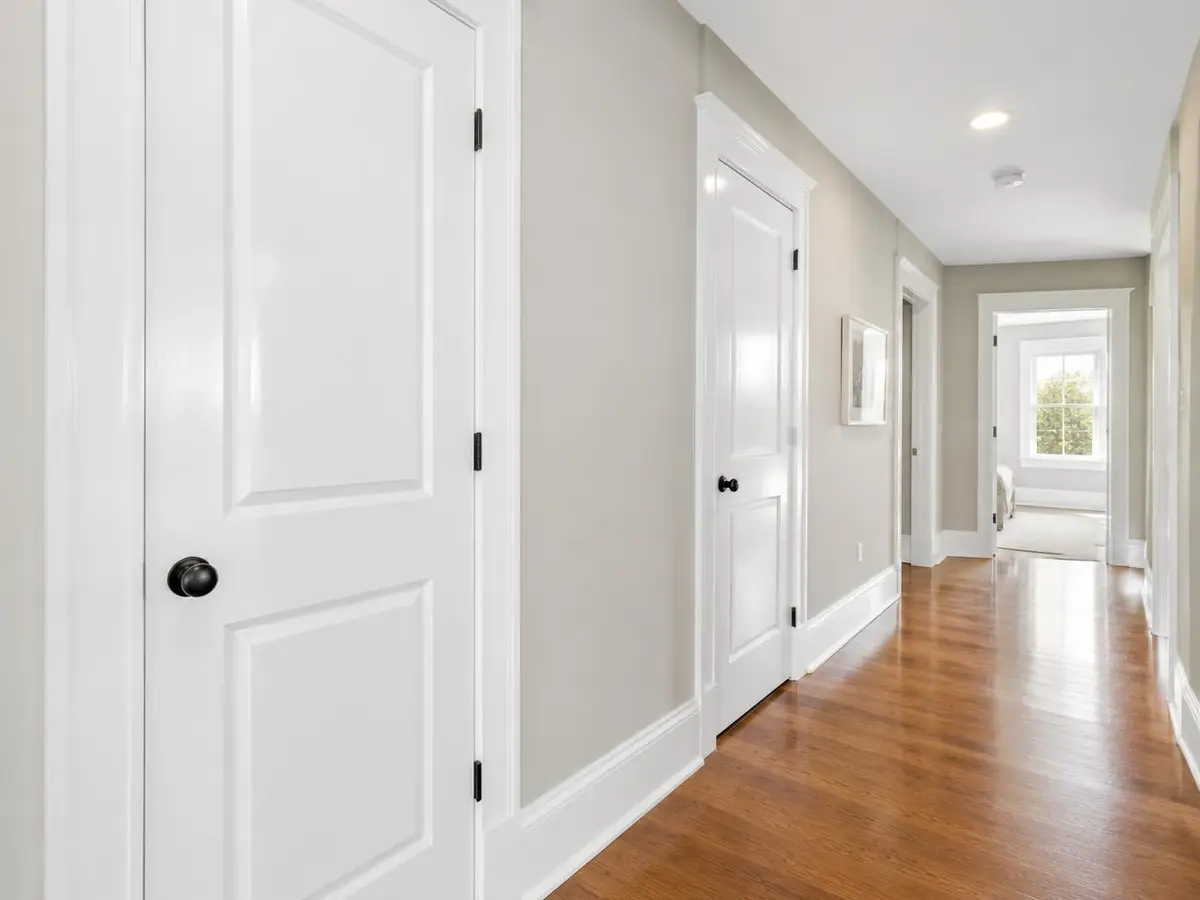
What preparation makes trim look clean rather than coated over?
Trim collects dust, cleaning residue and hand oils, especially around door handles and stair rails. Cleaning comes before sanding so contamination is not simply spread over the surface. We assess loose paint, chips and old filler, then prepare sound edges and address nail holes as agreed. Glossy coatings usually need scuffing and suitable primer rather than another coat straight over the shine. Primer is selected for the material and the existing finish where needed.
Caulking can tidy suitable joints between trim and adjacent surfaces, but it should not hide every gap indiscriminately. Moving joints, door clearances and drainage details need to function. Calgary's dry winters can open small trim gaps as materials lose moisture, and some seasonal movement may return. We distinguish a cosmetic joint from loose joinery or damaged material. If baseboard has swollen after a leak, replacement may be more sensible than filling and painting an unstable edge.
How do older character trim and newer doors differ?
In Mount Royal and Elbow Park, older casings and panel doors may have distinctive profiles worth preserving. Repeated heavy coats can soften those details and make doors bind. Preparation should respect the shape rather than bury it under filler. Lead-era paint is another consideration in older houses: if the coating may be hazardous, assessment comes before sanding or stripping. We discuss what can safely be prepared within the painting scope and where specialist work may be required.
Newer Calgary homes often have painted MDF trim, factory-primed doors and nail holes that become more noticeable after the first heating season. Cut edges and repairs may absorb paint differently from factory surfaces, so spot priming can matter. Hollow-core doors also need care around damaged skins and hardware. Paint can improve a sound surface, but it cannot correct a warped slab, poor fit or loose hinges. Those issues should be identified before the final finish makes later adjustments more awkward.
Which finish and application method suit doors and railings?
Doors and rails need a coating suited to frequent contact and cleaning. The preferred sheen depends on appearance, durability requirements and the condition underneath; higher sheen can make imperfections more noticeable. We discuss how the trim colour relates to walls and flooring, especially when an existing white has yellowed or reads differently in daylight. A sample next to the actual casing is more useful than assuming all whites will match once they share the same room.
Brushing, rolling or spraying can each be appropriate depending on profiles, access and containment. The estimate should identify the planned approach and any doors that will be removed for finishing. Hinges, handles, glass and adjacent flooring need protection or removal as agreed. Railings require particular planning because they are a safety feature as well as a painted surface. We establish how stairs will remain safely accessible without asking occupants to grip wet or uncured handrails during normal household use.
How do we plan door access and drying time?
A painted door needs more than a dry-looking surface before being shut tightly against weatherstripping or another painted edge. Follow the product's handling and curing guidance to reduce sticking and marks. For front doors, Calgary's direct sun and cool evenings affect the work window, even when the interior is comfortable. We arrange entry access and security with you before starting, rather than leaving decisions about an open doorway until the end of the day.
In condos, confirm rules affecting entry-door colours, corridor work and permitted hours before booking. Doors that are part of a fire-rated assembly need their labels, hardware and operation respected. If adjoining rooms also need work, coordinate interior painting so wall edges and trim finishes are planned together. For related built-in surfaces, see cabinet and millwork painting. Frank personally quotes and oversees the work. We walk through door faces, frames and repairs together, so you know what will be painted and how to use each doorway while the finish dries.