Cabinets
Can You Paint Oak, Melamine or Thermofoil Cabinets?
By Franklin SamuelPublished Last updated 5 min read
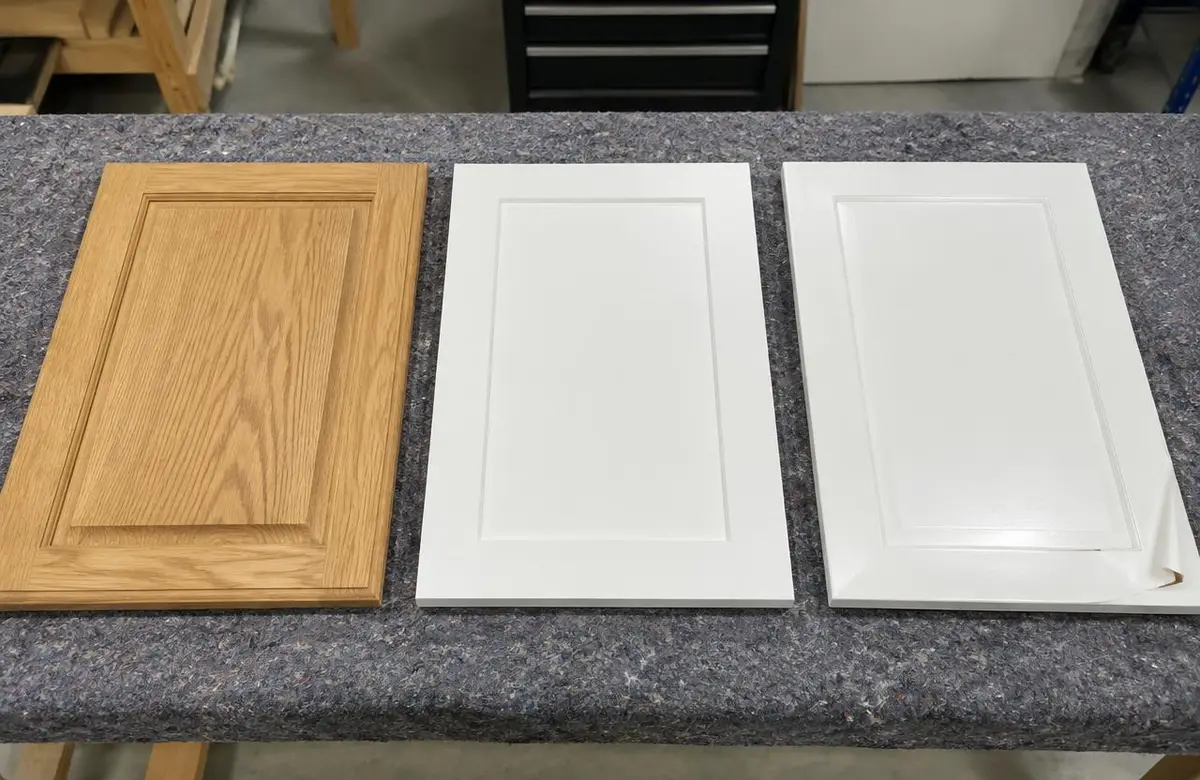
The first thing I want to know about your cabinets is what they are made from. Two white doors can look similar across a kitchen and need completely different preparation. One might be painted solid wood. Another might be a thin plastic foil wrapped over MDF. The material underneath sets the limits for the work.
When I look at cabinet painting in Calgary, I check the backs and edges of doors as well as the front. I look for loose coverings, water damage and old repairs. You do not need to identify every material yourself before calling. A few clear photos and a look at the actual kitchen give us a useful starting point.
Can you paint oak cabinets and still see the grain?
Yes. Oak can be painted, and its open grain often remains visible through the finish. Paint changes the colour, but it does not automatically fill the little grooves in the wood. If you like some wood character, keeping that texture can be a good choice. I would show you the expected look before treating visible grain as something to remove.
Look at a sample from an angle, not just straight on. Light travelling across a door makes the grain stand out more. A pale colour can still show it clearly. The question is not whether painted oak is allowed to have texture. It is whether that texture fits the kitchen you want and the level of preparation you have chosen.
What if you want oak to look smoother?
Grain filler adds a separate preparation stage. The filler is worked into the open grain, allowed to dry as directed and sanded back. Some surfaces need repeated work to get the level of smoothness being discussed. Deep grain and detailed profiles take patience. A quick coat of primer is not the same thing as a grain-filling process.
I make the expected result clear before the job starts. Filling can reduce the grain substantially, but the sample should set the target. Ask whether the quote includes grain filling on door fronts, drawer fronts and exposed cabinet ends. If some pieces are left textured while others are filled, the difference can become obvious once everything is the same colour.
Oak can also have stains that need attention through the primer system. I check the existing finish and any discolouration instead of choosing primer by wood name alone. Grease still has to come off before sanding. Even a handsome solid wood door gives poor results if the coating is being asked to stick to cooking residue.
Can melamine cabinets be painted?
Melamine has a hard, slick surface, so adhesion is the main concern. Proper cleaning, controlled scuffing and a bonding primer are part of the preparation. I avoid sanding through the thin face layer. The edges need close inspection too, because a chipped edge or loose banding is a repair issue, not something that disappears under a coat of paint.
I do an adhesion test spot first, using the proposed preparation and coating system. The test needs time according to the product instructions before checking how firmly the coating holds. A wet smear of primer tells us little. If the test lifts easily, I stop and reassess the surface and system before committing the whole kitchen to that process.
Melamine doors can have a sound face but a damaged core. Water around a sink can swell the material beneath the surface. Paint will follow that swollen shape; it will not press it flat again. Loose edge banding, crumbling corners and water-damaged sections need their own repair or replacement plan before painting becomes a sensible next step.
What about thermofoil that is peeling?
Thermofoil is a thin covering formed over a shaped core, commonly MDF. When the foil is peeling, painting over it is not a reliable repair. The new coating would still be attached to a covering that is coming loose. Tucking a lifted edge down and painting across it does not address the failing bond beneath the surface.
For peeling thermofoil, I usually recommend replacing the doors. Cabinet boxes may still be worth keeping, so this does not automatically mean removing the whole kitchen. Check the drawer fronts and exposed panels as well. A replacement plan works best when the new pieces and the parts staying in place are considered together, including how their finishes will match.
Intact thermofoil needs inspection too. Heat exposure, loose corners and the condition around handles all matter. I do not treat every door with a plastic-looking finish as melamine. Material identification comes first. If the door covering is questionable, we talk about replacement before spending time and money preparing a surface that may keep separating from its core.
Are MDF and solid wood easier to paint?
MDF can give a smooth painted face when it is dry and sound. Cut edges tend to absorb coatings differently and need careful sealing and preparation. Water-swollen MDF is another matter. Sanding a raised corner does not undo damage within the board, and painting over it will not keep an active leak from causing more trouble.
Solid wood also needs a condition check. Joints can move as indoor humidity changes, and a painted finish may show a fine line where pieces meet. Loose joints and splits need attention before painting. Heavy sanding around moulded details can spoil their shape, so preparation should preserve the door as well as create a surface the coating can grip.
Many kitchens contain a mix of materials. A wood door might sit beside a veneered end panel and a cabinet box with a different surface again. I plan those parts separately while keeping the finished appearance consistent. One preparation recipe for everything in the room can miss the places that need extra attention.
What should you check before choosing a colour?
- Look for lifted foil, chipped edges and loose edge banding.
- Check beneath the sink for leaks and swollen board.
- Open and close doors to find rubbing or loose hinges.
- Decide whether visible oak grain belongs in the finished look.
- Ask to see a prepared sample or adhesion test where needed.
Our completed painting work can help you describe the appearance you like. Bring that idea back to the actual material in your kitchen. A smooth inspiration photo cannot tell us whether your existing oak needs filling or your thermofoil doors need replacing. Those are decisions to settle before choosing the final colour.
My approach to painting existing cabinets is to keep sound parts, deal honestly with weak ones and explain the finish you can expect. That gives you a clearer decision than a simple yes or no based on a photograph alone.
Call or text 403-861-1963 or request a free estimate. I can look at your cabinet materials and help you sort out the next step.