Interior
Painting Textured and Popcorn Ceilings: What Calgary Homeowners Should Know
By Franklin SamuelPublished Last updated 5 min read
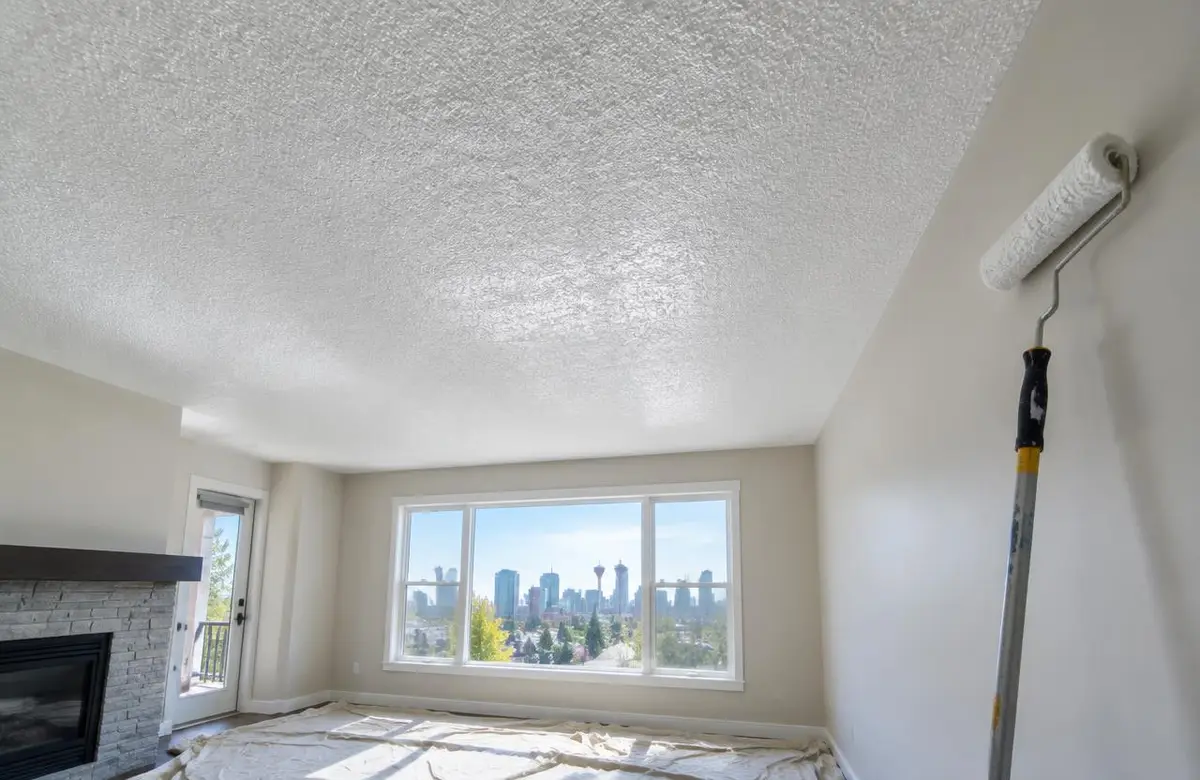
A ceiling can make a clean room look tired even when the walls are in good shape. Dust settles into the texture. Old water marks show through. The colour near the windows looks different from the colour above the sofa. A fresh coat can help, but popcorn and stipple need a different approach from a smooth wall.
When I look at a textured ceiling in a Calgary home, my first questions are about its condition and history. Is the texture firmly attached? Has it been painted before? Was there a leak? Those answers matter more than picking a roller. The goal is an even finish without turning a straightforward repaint into a repair job.
Could the texture contain asbestos?
Textured, popcorn and stipple ceilings in older homes can contain asbestos. You cannot tell by looking at the pattern, colour or thickness. Before any scraping, sanding or removal, get the material tested by an accredited lab. Arrange sampling through someone trained to collect it safely. Do not scrape off a piece yourself just to see what is underneath.
Painting over intact, undisturbed texture is often the simpler route. That starts with checking whether the ceiling really is intact and planning work that will leave it undisturbed. If material is loose, crumbling or damaged, I stop and discuss assessment before coating it. A coat of paint is not a repair for failing texture, and painting should not become an excuse to brush past a safety concern.
Fixtures and old patches need thought too. Moving a ceiling light or opening a damaged section can disturb material even when the main plan is only painting. Tell me about electrical work or repairs you want done first. We can put the work in the right order and avoid discovering a disturbance issue after the room has been covered.
Why does texture soak up so much paint?
An unpainted texture has lots of exposed surface, with peaks, pockets and porous material between them. Paint has more ground to cover than it does on flat drywall. The first application can disappear into that surface unevenly. Trying to stretch a small amount across the entire room often leaves thin areas and obvious differences when daylight crosses the ceiling.
Water can also soften some ceiling textures and weaken their bond. Heavy wet application, repeated rolling and pressure from a roller can pull material away. That is why I check the surface before committing to a method. A ceiling that has already been painted and remains sound may behave quite differently from one that has never received a coating.
Is rolling or spraying the better choice?
Rolling can work well on firm, previously painted texture. It gives controlled coverage without the same overspray concerns as spraying. I use a roller chosen for the texture and coating, keep the pressure light and avoid repeatedly working a wet section. More pressure is not the answer when paint is failing to reach a pocket.
Spraying can apply paint with less physical contact. That can be useful for a textured ceiling, but it still puts moisture onto the material. It does not make loose texture sound. The coating, spray setup and application all need to match the ceiling. I also plan enough coverage from the working angles so the raised areas do not leave thin shadows behind them.
Spraying needs much more masking. Walls, windows, flooring, furniture and openings have to be protected from overspray. In an occupied home, that preparation affects how the room can be used. I explain the application choice during wall and ceiling painting planning, including what needs to move and how access will work.
What should happen to a water stain first?
First, find and fix the leak. A roof issue, plumbing leak or recurring condensation problem needs attention before the ceiling gets painted. A dry-looking mark is not proof that the source has stopped. Ask whoever handles the repair to confirm what caused it, then allow the affected materials to dry before assessing the damage.
Once the cause is fixed and the ceiling is dry and sound, I use a stain-blocking primer selected for the mark and the existing surface. Ordinary ceiling paint alone can let discolouration bleed back through. The primer needs its specified drying time before the finish coat. Adding extra finish paint over a bleeding stain usually wastes effort.
A swollen seam, soft patch or sagging area needs more than stain blocking. For damaged board, drywall repair belongs ahead of finishing, with any texture disturbance addressed safely first. I also discuss how a repaired patch will meet the existing pattern. Matching old texture takes care, and side lighting can still reveal differences in height or pattern.
What preparation helps the room and the finish?
Ceiling work happens over everything you own in that room. I would rather spend time planning protection than ask you to live with paint specks afterwards. Large furniture may need to move out, while other pieces can sometimes be grouped away from the work. Clear access lets me keep the application steady across the ceiling.
- Tell me about past leaks, repairs and any available material testing results.
- Decide whether ceiling fixtures are staying before painting begins.
- Remove small belongings, artwork and fragile items from the work area.
- Discuss dust removal only after the texture and safe preparation method are assessed.
- Plan where pets and household activity will go while the room is closed off.
Will new paint hide the texture?
Paint refreshes the colour; it does not turn popcorn into a smooth ceiling. A low-sheen ceiling finish can soften reflections, but raised peaks will still cast shadows. Strong window light makes those shadows more obvious. I like to discuss that before work begins so you are choosing a cleaner textured ceiling, not expecting a flat surface from paint alone.
If you want the texture removed, that is a separate decision with testing and a different scope. If you want to keep it, a careful repaint can fit nicely with fresh walls and repaired corners. Call or text 403-861-1963 or request a free estimate. I will look at the ceiling with you and explain the next steps.