Interior
Painting Trim and Doors: Oil vs Waterborne Alkyd vs Latex
By Franklin SamuelPublished Last updated 5 min read
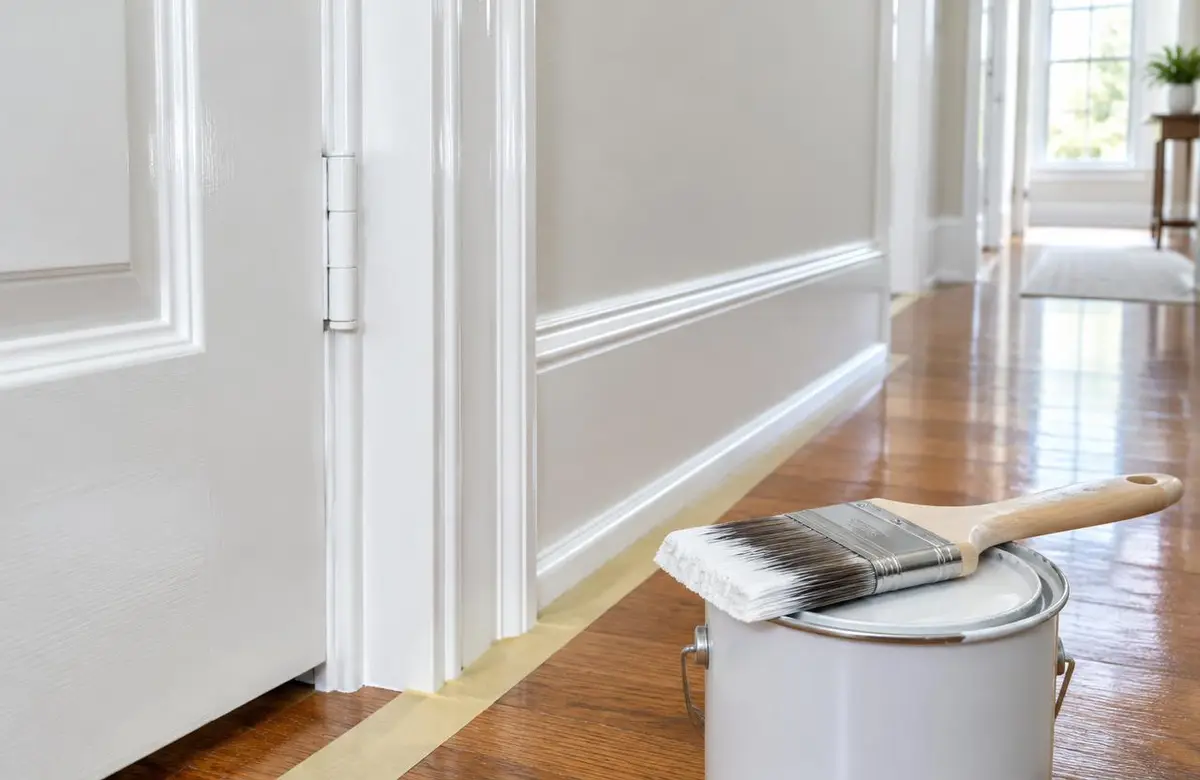
Baseboards get knocked by vacuums. Door edges meet stops, and handprints gather around handles. That is a tougher job than most walls face. When I paint trim and doors, I choose the coating for that daily contact as well as the look you want. A nice white colour alone will not make wall paint a good trim enamel.
The labels can be confusing. Oil, waterborne alkyd and latex describe different coating families, but the full product matters. I check what the enamel is made to coat, how it bonds and what it needs during drying. Then I match the preparation to the finish already on your woodwork.
Why does trim need a harder enamel?
A trim enamel is designed to form a finish that handles repeated contact and cleaning. You want doors that resist sticking and baseboards that can be wiped without quickly wearing through. Hardness is part of that, but adhesion matters just as much. A hard finish over grease or glossy old paint can still peel away at the first knock.
Sheen is a separate choice. Satin gives a quieter reflection, while semi-gloss makes profiles stand out more clearly. Neither name tells the whole story about durability. I bring the discussion back to a trim-rated product and the condition underneath. The brightest reflection in the room is not necessarily the strongest coating.
How can you tell if the old paint is oil-based?
One useful screening check is rubbing a hidden spot with rubbing alcohol on a cotton ball. Latex paint typically softens or transfers onto the cotton. An oil-based finish generally does not. Clean the spot first, work gently and choose somewhere the small test mark will not show. Keep alcohol away from flames and follow its handling instructions.
I treat that result as a clue, not a complete coating history. Other hard finishes can resist alcohol too, and woodwork sometimes has several different layers. If the result is unclear, further assessment and a small adhesion test help guide the system. It is better to sort that out behind a door than discover poor bonding across every casing.
Before scuff-sanding old painted trim, I also consider whether the existing coating needs hazardous-material assessment. The alcohol check says nothing about lead. Unknown old coatings should not be turned into dust casually. Cleaning, testing when needed and deciding on safe preparation come before abrasion, even if the finish seems firmly attached.
What does traditional oil paint offer?
Oil-based enamel can level nicely and form a hard finish. It also brings stronger odour, solvent cleanup and a drying schedule that needs planning. Ventilation matters, especially when bedrooms and hallways remain in use. I discuss how the home will function during the work before choosing a coating that affects those spaces.
White oil paint can yellow over time, especially away from light. You might notice it inside a closet or behind an open door when nearby trim still looks lighter. Repainting everything with another oil white may not solve the reason the colour bothered you. That is one reason I often discuss waterborne options when homeowners want fresh white woodwork.
How is waterborne alkyd different from latex?
Waterborne alkyd brings alkyd coating technology into a water-based system. Products in this group can offer useful levelling and a smooth enamel appearance with water cleanup. They still need careful application and time to harden. Being water-based does not mean a door can be shut firmly against its stop as soon as it feels dry.
Latex trim enamels are another option. Many are acrylic-based and made specifically for doors and woodwork. They can keep whites cleaner-looking than traditional oil coatings, and some have good resistance to sticking once cured. I compare the actual product instructions, handling and finish instead of assuming every latex enamel behaves the same way.
Ordinary wall latex is a different discussion. Using leftover wall paint on a door because the colour matches can leave you with a finish that marks or sticks too easily. For trim and door painting, the coating needs to suit moving edges, frequent handling and the cleaning that happens around handles and switches.
Can waterborne paint go over old oil paint?
Yes, with proper preparation on a sound existing finish. I clean away hand oils and household residue, deal with damaged coating and scuff-sand the glossy surface once safe preparation has been established. The aim is to dull the shine evenly, not grind through the old paint. Dust must then be removed before primer goes on.
A bonding primer helps build the connection between the prepared oil finish and the new waterborne coating. I choose primer and topcoat as a compatible system and follow their recoat instructions. Skipping those steps because the new paint says it has good adhesion is a gamble I would not take on a whole house of doors.
Should doors be brushed, rolled or sprayed?
Brushing gives control around profiles and in occupied rooms where full masking would be awkward. A small roller works well on broader sections, sometimes followed by careful brush work to lay the coating off. Good loading and steady strokes matter. Going back over paint that has begun to set often leaves more marks than it removes.
Spraying can give a very even finish, particularly on removed doors, but it needs a clean work area, protection and space for drying. It also makes preparation marks easy to see. The same thinking applies to cabinet painting: a smooth spray finish starts with cleaning and surface work, not simply with choosing a spray gun.
When can doors go back into normal use?
Dry to the touch and fully cured are different stages. Follow the coating instructions for handling, rehanging and normal use. I plan rehanging around safe handling and keep fresh edges from being pressed tightly against stops too soon. Cool conditions and limited airflow can slow progress. Rushing this step can leave stuck edges or impressions in otherwise tidy work.
- Keep freshly painted doors from resting against each other.
- Leave hardware off until the finish can handle installation.
- Avoid firm contact with weatherstripping or door stops during early curing.
- Hold off on scrubbing until the coating has reached its stated cleaning stage.
If your trim is yellowed, chipped or simply ready for a new colour, call or text 403-861-1963 or request a free estimate. I will check the old finish and explain a practical painting plan.