Exterior
Deck Stain vs Paint in Calgary: Which Lasts Longer?
By Franklin SamuelPublished Last updated 5 min read
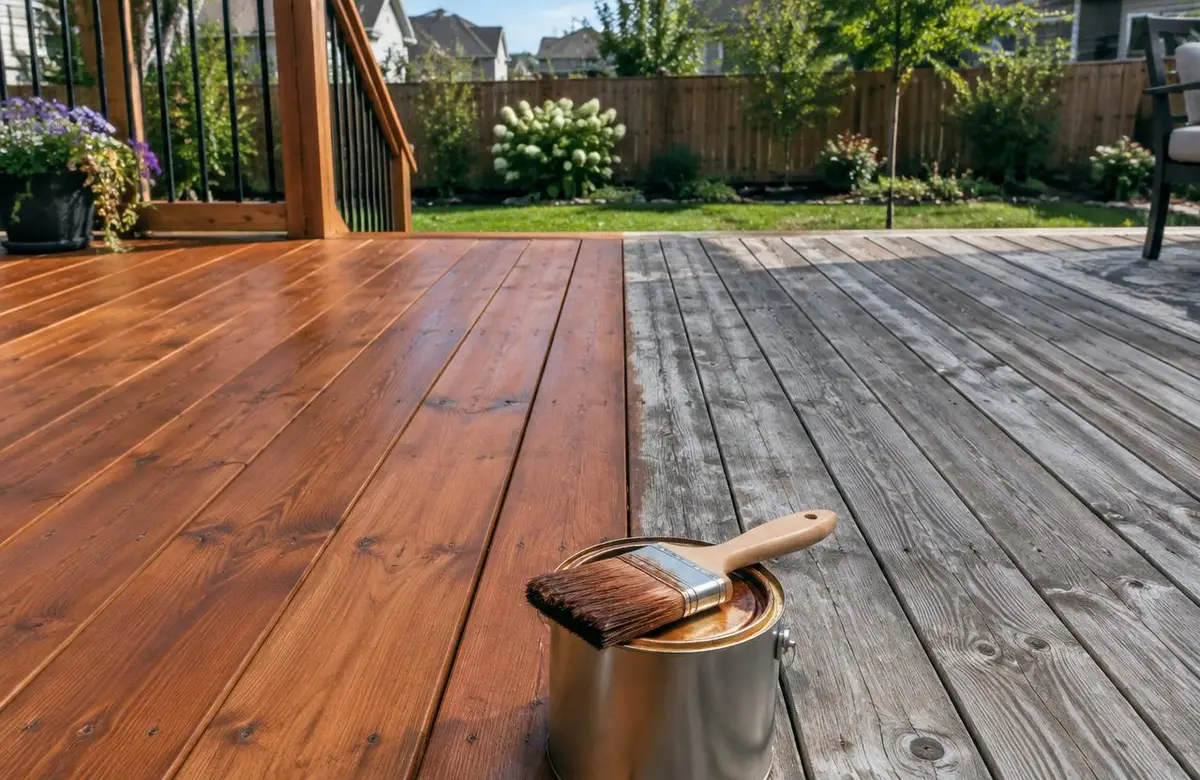
When someone asks whether deck stain or paint lasts longer in Calgary, I start with what is already on the boards. A penetrating stain cannot soak through an intact paint film. A new coat of paint cannot hold down a loose old finish. The useful question is which system suits the wood now, and what its next round of maintenance will involve. That matters more than a claim about how long a can of finish should last.
Decks take a different kind of wear from fences and siding. Water sits on horizontal boards, shoes grind grit into the surface and snow can stay against the wood. Furniture legs and shovel edges add wear in specific spots. With deck and fence staining, I look at those conditions before recommending a finish. The right choice should suit both the appearance you want and the maintenance you are willing to do.
What is the difference between transparent and semi-transparent stain?
Transparent stain leaves the wood grain and much of its colour visible. It suits homeowners who want the boards to look like wood rather than a painted surface. Low-pigment finishes generally offer less screening from sunlight than more heavily pigmented options. Clear and transparent are not interchangeable labels across every product line, so I read the intended use and preparation instructions rather than choosing by the front label alone.
Semi-transparent stain adds more colour while leaving grain visible. It can help blend mild colour differences, but it will not hide every old repair or mismatched replacement board. Many penetrating stains gradually wear and fade rather than lifting in sheets. That can make a maintenance coat more straightforward when the surface remains sound. However, not every product called stain is fully penetrating, and excess application can leave unwanted material on the surface.
Is solid stain basically the same as paint?
Solid stain hides most of the wood's colour while leaving some texture apparent. It can suit a deck with sound boards that look uneven after preparation. Many solid stains form a surface film, so they can peel when moisture or poor adhesion breaks the bond. So a solid stain can behave more like paint than you'd expect.
Paint also forms a film and gives an opaque appearance. On a walking surface, it must be specifically suitable for decks or floors; ordinary wall or siding paint is not the substitute. A sound existing painted deck may be a candidate for repainting after proper preparation. Starting with paint on bare deck boards is a different decision because returning to a transparent appearance later can involve substantial removal work.
Which finish handles foot traffic best?
The busiest route from the back door to the steps usually shows wear before the quiet corners do. A heavily pigmented finish may hide uneven colour, but it does not prevent abrasion. A penetrating finish may show a worn path while remaining easier to refresh. A film-forming finish can look uniform until local damage allows water underneath. I compare the likely repair work, not just how the deck will look immediately after coating.
Consider pets, dragged planters, a barbecue and furniture that gets moved frequently. Grit beneath a chair foot can scrape any finish. Rugs and mats can also trap moisture, depending on their construction and placement. Keeping boards clear enough to dry helps the wood as well as the coating. No finish turns an exposed deck into an indoor floor, and expecting that level of spotless uniformity usually leads to disappointment.
How do snow, shovels and de-icer affect the choice?
Snow cover keeps moisture against the surface, while melting and refreezing expose weak areas in a coating. Where snow removal is necessary, avoid chopping at ice or scraping aggressively with a sharp metal edge. A suitable shovel used with care can reduce gouging, but it cannot remove every risk. Damage that exposes wood should be assessed when conditions allow, rather than hidden under another coat without preparation.
De-icer deserves caution around wood, coatings, plants and fasteners. Check compatibility instead of assuming that a product safe for a walkway is suitable for your deck. Residue needs appropriate cleaning before refinishing. I also look for snow piled beside the house, blocked gaps between boards and drainage problems under planters. Changing those habits can help more than switching to a supposedly tougher finish while leaving moisture trapped in place.
What preparation makes the biggest difference?
Preparation starts with identifying the old finish and testing whether it is holding. Loose film needs removal; dirt and grey fibres need appropriate cleaning. A cleaner should suit the wood and existing coating. Pressure washing too aggressively can leave grooves and fuzzy fibres that make the next finish uneven. Simply blasting until the wood looks pale is not a controlled preparation method.
Brightening may be part of the process when the chosen cleaning or stripping system calls for it. A compatible brightener can help address discolouration and restore conditions appropriate for staining, but it does not replace cleaning or structural repairs. Sanding then addresses raised fibres, rough edges and remaining sound coating transitions as needed. Dust must be removed, and boards must dry sufficiently before any coating goes on.
- Check for soft boards, loose fasteners and unsafe steps before cosmetic work.
- Identify whether the old finish is penetrating or film-forming and whether it is still sound.
- Clean, rinse and use a compatible brightening step when the preparation system requires it.
- Sand as needed, remove dust and verify that the wood meets the coating's moisture requirements.
- Follow application and drying instructions, including when furniture and foot traffic can return.
What will maintenance actually look like?
A penetrating finish typically needs attention when colour fades and exposed areas begin looking dry or worn. Maintenance can be simpler if it happens before severe weathering develops. Film-forming finishes need inspection for lifting edges and local peeling, with scraping or stripping where adhesion has failed. Adding another layer over loose material does not reset the surface. The preparation burden can grow when repeated coats cover earlier failures.
Weather, shade and board condition make fixed maintenance promises unhelpful. I assess the deck and explain the likely upkeep for the proposed system. Our guide to Calgary exterior painting weather explains why warm afternoons alone are not enough. For a horizontal deck, dry wood and suitable weather through the required drying period are especially important.
If you want help comparing options, see our deck staining service. Call or text 403-861-1963 or request a free estimate, and I will review the wood and existing finish with you.