Exterior
Painting Stucco vs Vinyl vs Hardie Board in Calgary
By Franklin SamuelPublished Last updated 5 min read
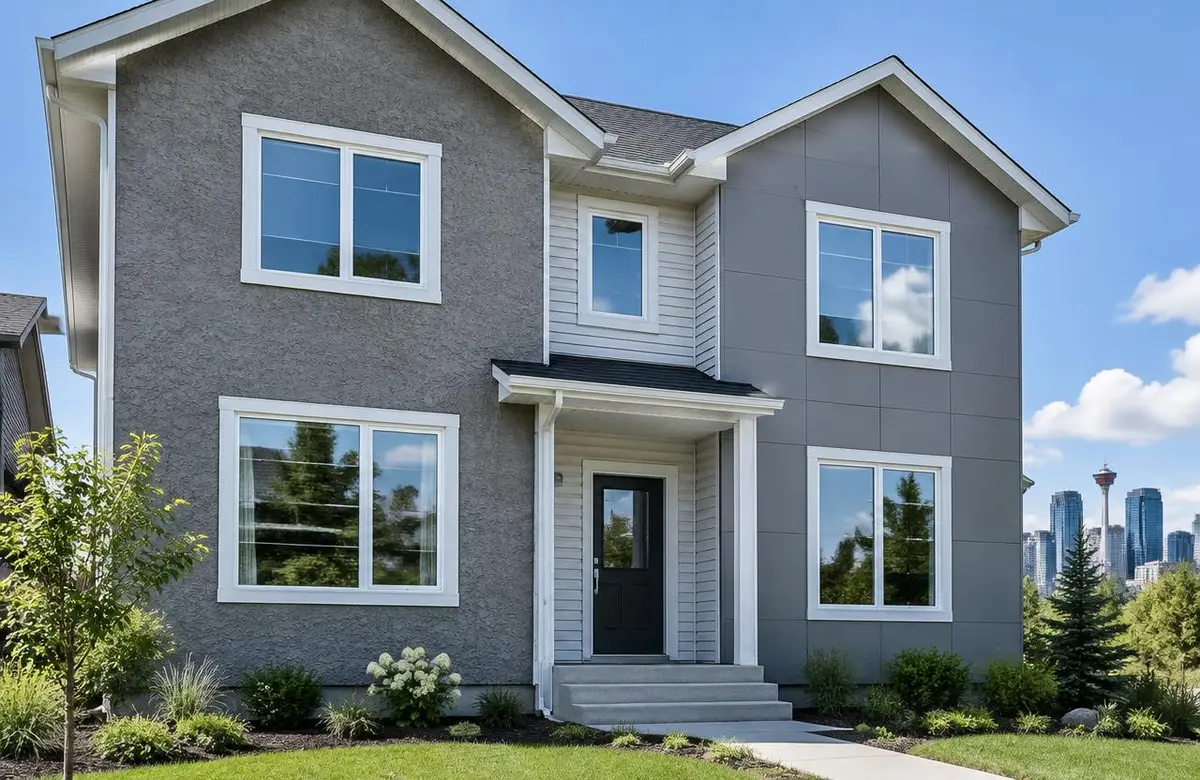
Painting a Calgary house starts with identifying the siding, not picking the colour. Stucco, vinyl and fibre-cement can all be painting candidates, but they do not accept the same preparation or coating system. I look at the existing finish, the condition underneath it and how water moves around the house before recommending paint. A clean-looking wall can still have loose material or moisture problems that need attention first.
When I assess exterior painting in Calgary, I also look at exposure. A sheltered wall beneath a deep overhang faces different conditions from siding beside a downspout or a sunny west wall. The plan needs to suit those differences. Applying one product over everything without checking compatibility is not a sensible shortcut, even when the desired colour is the same across the house.
What does stucco need before painting?
Stucco has texture and pores that collect dust, and its raised areas can hide small cracks. I start by checking whether the surface is sound or shedding material. Cleaning needs enough care to remove contamination without gouging the finish or driving water into openings. Loose coatings need removal, and the wall must dry before repairs and coatings proceed. Paint applied over chalky residue can bond to the residue rather than the wall.
Cracks need assessment before filling. Small, stable cracks may accept a compatible repair, but wider cracks, repeated movement or staining around openings deserve closer investigation. The repair should suit the existing texture as well as the material. A smooth stripe across rough stucco can remain obvious after painting. Coatings can even out colour; they cannot make a poorly matched patch disappear or stop structural movement.
For suitable stucco, I look for breathable masonry coatings compatible with the existing finish. Breathability helps water vapour move through the coating rather than treating the wall like a sealed container. That does not mean paint solves water entry. Damaged flashing, leaking joints and moisture behind the stucco need correction first. A high-build coating is not automatically the right answer, and a thick application is not a substitute for sound repairs.
Can vinyl siding be painted without warping?
Vinyl can be painted when it is sound and the proposed coating and colour are approved for that siding. The important issue is heat. Darker colours absorb more solar heat, and unsuitable colour choices can cause siding to warp or buckle in the sun. I do not assume that a colour is safe just because it appears on an exterior colour card or looks similar to the existing shade indoors.
Colour selection needs to follow the siding and coating manufacturers' guidance, including any restrictions on darker shades and approved vinyl-safe colours. Choosing something lighter than the original can be a useful starting point, but it is not the whole compatibility check. The exact coating system matters. If the siding cannot be identified or its condition raises concerns, I explain those limits before a colour decision becomes a painting commitment.
Vinyl also needs room to move as temperatures change. Preparation should not glue overlapping pieces together or fill drainage openings with paint or sealant. Washing removes dirt and other residue, followed by rinsing and drying. I check for brittle panels, loose sections and existing distortion. Paint does not restore flexibility to brittle vinyl or straighten a buckled wall, so replacement can be the better use of the budget in those areas.
How is fibre-cement different?
Fibre-cement, often called Hardie board, is another surface that needs identification before preparation. Hardie is a brand name, not a description of every cement-based siding product. Boards may have a factory finish, an older site-applied coating or exposed areas with different preparation needs. I check the applicable instructions and existing adhesion rather than assuming that every board can receive the same primer and finish.
Cleaning comes first, with attention to dusty surfaces, mildew and chalking. Loose paint needs removal without damaging the board. Exposed areas may need a compatible primer, while sound factory finishes can have different requirements. Joints, cut edges and fasteners need assessment under the siding manufacturer's guidance. Not every visible gap should be caulked, because some joints and clearances serve a drainage or movement purpose.
Damaged fibre-cement needs repair or replacement before painting. Swollen edges, broken corners and recurring moisture marks deserve more than a dab of filler. Aggressive sanding or cutting can create hazardous dust, so preparation methods and dust control matter. I avoid treating the surface like ordinary wood siding. Once repairs and cleaning are complete, the coating should suit both the board and whatever sound finish remains on it.
When is painting a good idea, and when should it wait?
Painting makes sense when the siding is structurally sound, contamination can be removed and a compatible system is available. It can refresh faded colour and protect properly prepared surfaces without replacing serviceable materials. It should wait when there is active moisture entry, extensive cracking or widespread siding failure. Covering those warning signs makes inspection harder without dealing with the reason they appeared.
- Stucco: investigate widespread cracks, soft areas and recurring water stains before choosing a coating.
- Vinyl: replace brittle, loose or distorted sections and confirm that the proposed colour is vinyl-safe.
- Fibre-cement: address damaged boards, exposed edges and moisture sources before priming or painting.
- Every surface: check adjacent flashing, gutters and drainage rather than assuming the coating alone is responsible.
A house with mixed siding may need separate preparation and coating systems even when everything will share one colour. I discuss transitions, trim and access before work begins so the scope is clear. You can browse examples of our painting work for colour ideas, but a photograph cannot confirm whether the same approach suits your siding. That decision comes from looking at the actual house.
What should your painting estimate explain?
Ask which surfaces are included, what repairs are needed and how the existing coating will be prepared. The estimate should distinguish painting from siding replacement or moisture repairs. It should also identify the colour-selection constraints that matter for your material. For a siding painting assessment, I would rather explain a limitation before work starts than coat a problem that should have been repaired.
Ready to discuss your siding? Call or text me at 403-861-1963 or request a free estimate. I will look at the surface and explain the preparation it needs.